
A new title on the door doesn’t Automatically make you ready

You got promoted into a new role. Smashing.
And then came the whiplash.
Suddenly, everything feels different — the expectations, the stakeholders, the decisions you’re expected to make, the people looking to you for answers.
So why does this new role feel… strangely unsettling?
> Read more: The Two Shifts That Make Busy Feel Different
It’s rarely ever just ‘one thing’
A leader I worked with was having difficulty articulating exactly what was making her feel overwhelmed when we met for coaching.
She was juggling her day-to-day deliverables, organisational change, her own development, leading her team, family and self-care.
And to top it all: a new, bigger role at work.
No wonder she couldn’t pinpoint one specific source of stress.
It was everything. All at once.
Her experience is increasingly common.
Leadership today happens in a landscape of ambiguity, disruptions, rewriting business models and shifting expectations.

And when you’re stepping into a new role, there’s often an additional layer: you’re expected to deliver at pace — while you’re still figuring out what the role actually requires of you.
It can feel like you’ve been handed the entire airplane while you’re still working out where the flight controls are.
No wonder that sense of whiplash feels so real.
The old playbook isn’t cutting it
So what’s really happening underneath all that flurry?
Chances are, your title might have changed but your sense of self hasn’t necessarily caught up yet.
You might notice yourself:
micromanaging - because you don’t yet trust your judgement.
staying small - because it feels safer than getting it wrong.
over-preparing - because you’re trying to eliminate surprises.
second-guessing - and slowly losing sight of the bigger picture.
None of these necessarily mean you’re a poor leader.
They may simply be signals that some things need to evolve to serve you better.
> Read more: Uncertain about ‘uncertainty’?

So how can you navigate this phase a little better?
1. Examine the friction
The new terrain that comes with a new role is unfamiliar—for now.
There’s often a gap between how you delivered in your previous role and what’s required of you ahead.
That gap creates friction.
You might notice it in :
tasks you keep putting off
decisions that take much longer than they should
conversations you keep avoiding
things you keep glossing over because the new way of doing things hasn’t quite clicked yet
Friction isn’t necessarily a bad thing. Some friction stretches us and helps us grow.
But persistent, unhelpful friction can drain mental energy and affect how effectively we lead.
One simple place to locate your friction points?
Look for where you’re ‘hacking’ your way through the new role.
Where are you relying on temporary fixes, workarounds or old habits just to get things done?
Maybe you’re still using the decision-making approach that worked when you were an individual contributor.
Maybe you’re jumping in to solve problems your team should now own.
These hacks are your clues.
Examine your hacks, both at work and in your personal life. Determine how you can reduce some of the friction around them, so you can deliver more smoothly.
2. Manage YOU
Transitions are rarely a straight line.
One day, you’re energised by the possibilities. The next, you’re wondering what on earth you’ve signed up for.
That swing is normal.
The better we can manage our swings, the more consistency and stronger leadership we create for ourselves, and our teams.
That doesn’t mean pretending everything’s ok all the time, or forcing fake platitudes when worries are clearly present.
It’s about noticing your inner signals before they drive your behaviour.
Does my body tense up before every meeting with the global team?
Am I sleeping poorly every night, even when I’m clearly exhausted?
Am I hiding behind the ‘I’m busy working’ excuse with the kids?

These signals are useful information, they’re sending you mini warnings before things escalate.
The earlier you catch these patterns, the more choice you have over how you respond.
And that matters because how you manage yourself becomes part of how you lead others, at work and at home.
We’re not after a perfectly smooth transition; we’re looking for greater steadiness through the inevitable bumps.
> Read more: Why Capable People Still Get Stuck in the Same Cycles
3. You don’t have to be the only answer
Many leaders feel the need to have all the answers.
I felt this keenly when I was leading teams, and representing Asia in regional planning and performance conversations. I felt compelled to have the solutions, to know how to fix things.
But here’s the reality: No one has all the answers.
Not even AI.
So why do we still expect ourselves to?
When you’re stepping into a new role, you’ll likely feel this pressure to perform and ‘live up to expectations’ even more keenly.
But we often forget that new skills, mindsets and identities take time to build.
In that process, you may build new capacity; but you still won’t ever have all the answers.
The sooner you can let go of the expectation that you must have everything figured out, the more capacity you create for what leadership actually requires.
You’re here not just for the sprint.
You’re here for the marathon.
The title may change overnight. You don’t.
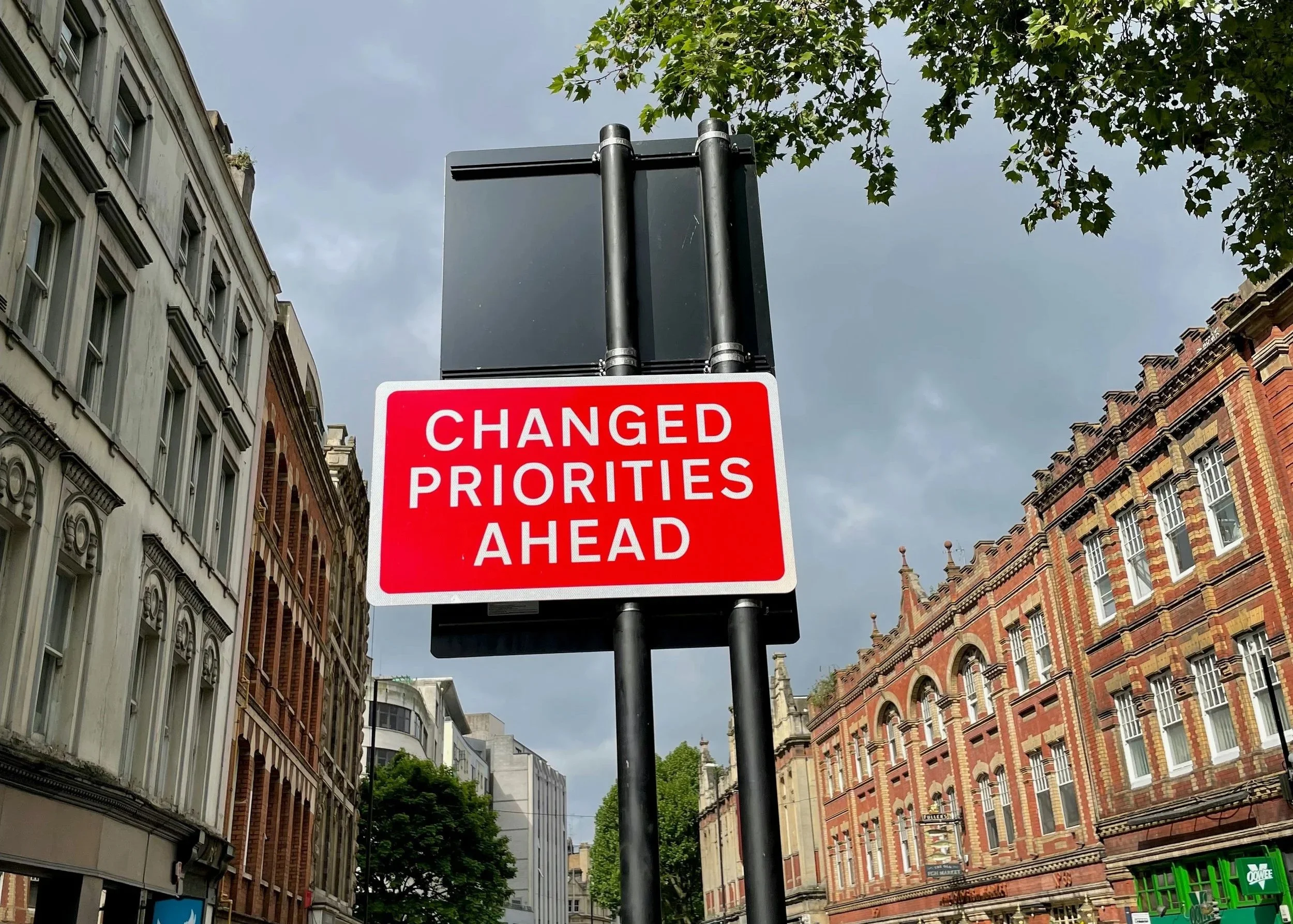
Stepping into a bigger or different role often reveals a gap between who you’ve been, and who the role now asks you to become.
Your old operating system is to running a new role.
But a transition is more than simply learning a new job.
Our operating system needs an upgrade. It’s about working out how the new title at the office now fits with the other parts of your life.
It is an identity shift.
> Read more: The Hardest Part of Change Isn't the Change. It's the Waiting.
Need a partner to make sense of what this next chapter requires of you — not just in what you do, but in how you think, lead and show up in your new role?
That’s the kind of transition work I love doing with clients.
Reach out for a complimentary discovery call.
Let’s explore what this next evolution of you might look like.
SUBSCRIBE
If this resonated:
hit the Sign Up button (on the left) for my newsletter to receive more about navigating change at work and in life.
forward this to someone who will also benefit from using these tools and perspectives.
