
The Two Shifts That Make Busy Feel Different
You know that feeling when you finally get home after work, sink into the couch… and feel completely wiped out? And you’re thinking: "Has it only been ONE work day that’s gone by?”
Or you might have asked your spouse the same question twice within five minutes—because you weren't listening. Your mind was busy combing through tomorrow's to-do list.
Even reading this article required your attention. One, out of countless emails, notifications and ‘must-read’ articles competing for your focus.
We seem terribly time-starved these days. Work, family, social media, messages, errands, decisions—everything’s demanding a piece of you.
You're probably thinking, "What choice do I have?"
It's true. Many of these demands aren't going away anytime soon.
But more than just scrambling—what we easily miss amidst this clamouring, is the deeper cost of simply pushing through everything with ‘sheer grit’, and trophy-worthy dark eye circles.
> Read more: Are You Getting Ambushed by the Transitions Around You?
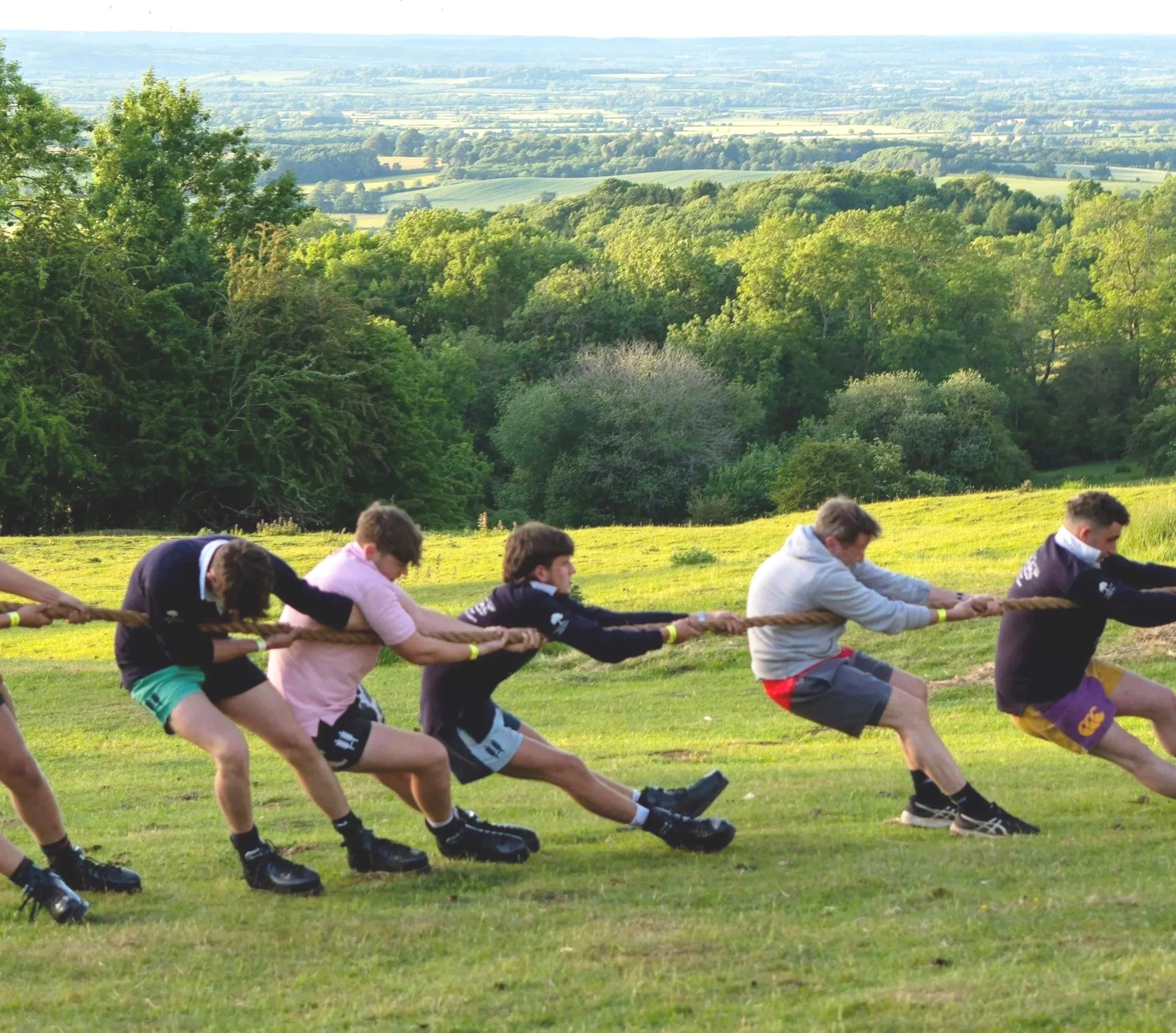
Busy - Your New Normal?
Our brains were never designed to operate in permanent ‘high alert’.
Yet many of us spend our days continuously planning, solving, remembering, deciding and responding.
At some point, it’s no longer about the lack of time. It’s a shredding of our attention and energy.
You might find yourself becoming more irritable. Less patient. Quicker to judge. More distracted in conversations. Less generous in how you respond to others.
Perhaps you're permanently tired—even after a weekend.
Your battery runs low—both for yourself, and for others around you.
Your nervous system gradually begins treating this constant load as normal.
You’re hyper-vigilant and exhausted all the time.
More Hours Won't Fix This
We all have the same 24 hours.
Some people seem to navigate demanding seasons with greater steadiness.
Not because they have more time than we do, but because they're more intentional about where their attention goes, and where they replenish their energy.
It's also not about wearing burnout like a badge of honour.
"I'm surviving on five hours of sleep."
"I can't remember my last holiday."
“No time to attend family dinner on Sundays.”
These aren't measures of toughness or success; but rather warning signs that something needs to change.
When I'm coaching clients through particularly challenging seasons, we often work on two simple shifts, with two tools.
One helps reduce unnecessary pressure.
The other helps replenish what's been depleted.
> Read more: Why Capable People Still Get Stuck in the Same Cycles

Shift #1: The Subtraction Tool
“What if I didn’t…?”
Inspired by the psychology concept of mental subtraction—this practice is often used to help appreciate positive things in our lives.
I like adapting it slightly differently for moments of overwhelm.
When everything feels urgent, subtraction helps reveal what is actually essential.
Ask yourself:
"What if I didn't do this… what would happen?"
Let’s imagine your child's school concert falls on the same evening you've been asked to prepare for a presentation to senior leadership.
Ask yourself:
"What if I didn't spend tonight polishing my presentation?"
Perhaps your answer is:"I'll still deliver a solid presentation tomorrow. May not be perfect, but it’ll be good enough."
Now ask:
"What if I didn’t go for my child's performance?"
You might answer:"They’ll remember I wasn't there. And I'll remember it too.
The decision suddenly becomes clearer.
It isn’t about needing more time to do everything, nor is it a guilt trip or moral judgement on the choice you make.
It’s about focusing your energies on what’s most needed in that moment.
Subtraction isn't about abandoning your commitments, or making permanent trade-offs.
It's about creating enough space to do what’s truly needed well, at that point in time.

Shift #2: The Addition Tool
Lean On Your Tribe.
Many of us pride ourselves on being independent, and it's also often quicker to do things by ourselves.
But some moments in life just aren't meant to be carried alone.
Ironically, the very moments we think, "I don't have time to involve anyone else," are often when we need our people the most.
I remember coaching a solopreneur who had lost her mojo along the journey of building her business. She was juggling everything—marketing, finances, client work, administration, family life.
Too many demands, too little time, flat out of energy.
She turned to her tribe—her group of trusted people—of 2 other fellow solopreneurs.
Not because they could magically solve her problems, but because they were her pillars; they understood. They were her pillars.
More than ‘just singing kumbaya’, her tribe was a safe place to pause for a moment, and take a collective breath with.
That conversation gave her perspective. Encouragement. Fresh ideas.
A reminder that she wasn't carrying it alone.
Again, it wasn’t about creating more hours in her day—because the demands will keep increasing to fill the container we create.
It was about getting renewed energy and inspiration—the Addition.
That’s the resource we’re often missing, to continue onward.
What does your tribe look like - who’s in it?
Who reminds you who you are when you've forgotten?
Who helps you think more clearly when everything feels overwhelming?
And if you don’t have your tribe yet, who might you begin inviting into your life?

Solve the right problems
The next time you find yourself stretched in every direction, instead of struggling with "How do I find more time?”, try asking two different questions.
What can I subtract, for this moment?
What can I add, with my tribe?
One creates space.
The other restores energy.
Together, they help you move through demanding seasons with a little more clarity—and more self-compassion.
Because life won't always become less busy.
But we can navigate it better, especially over tricky seasons of Transitions and Change.
We're in this for the long haul.
If you're in a season where everything feels important, yet you're struggling to know where your attention belongs, coaching creates the space to slow down, think clearly, and move forward with greater intention.
Reach out for a complimentary discovery call to find out how.
SUBSCRIBE
If this resonated:
hit the Sign Up button (on the left) for my newsletter to receive more about navigating change at work and in life.
forward this to someone who will also benefit from using these tools and perspectives.
